
 EN
EN
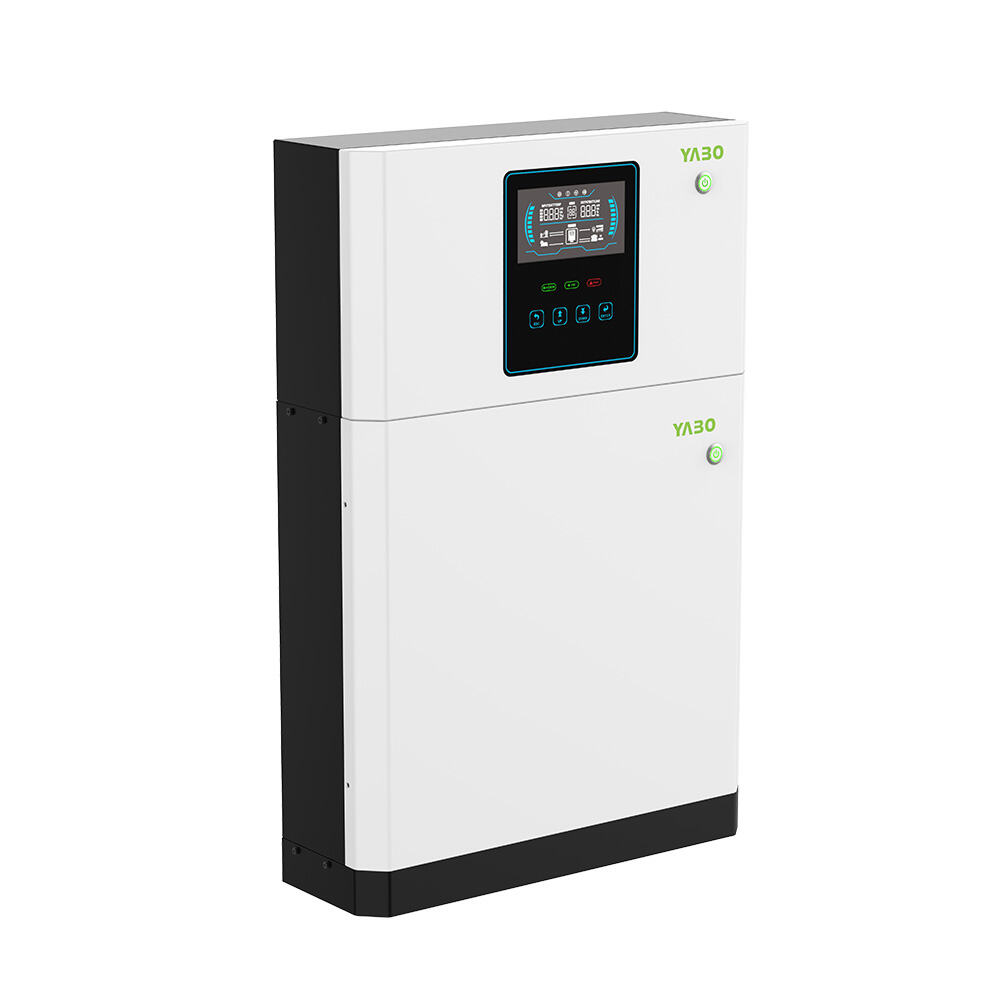
Managing energy expenses in large commercial or industrial buildings has become one of the most pressing operational challenges for facility managers and building owners today. Electricity rates are volatile, demand charges continue to climb, and grid reliability is increasingly uncertain. An energy storage battery system has emerged as one of the most practical and financially impactful solutions available, offering buildings the ability to store electricity when it is cheap and deploy it strategically when costs peak. Understanding exactly how this technology translates into measurable cost savings is essential before committing to any investment in building energy infrastructure.
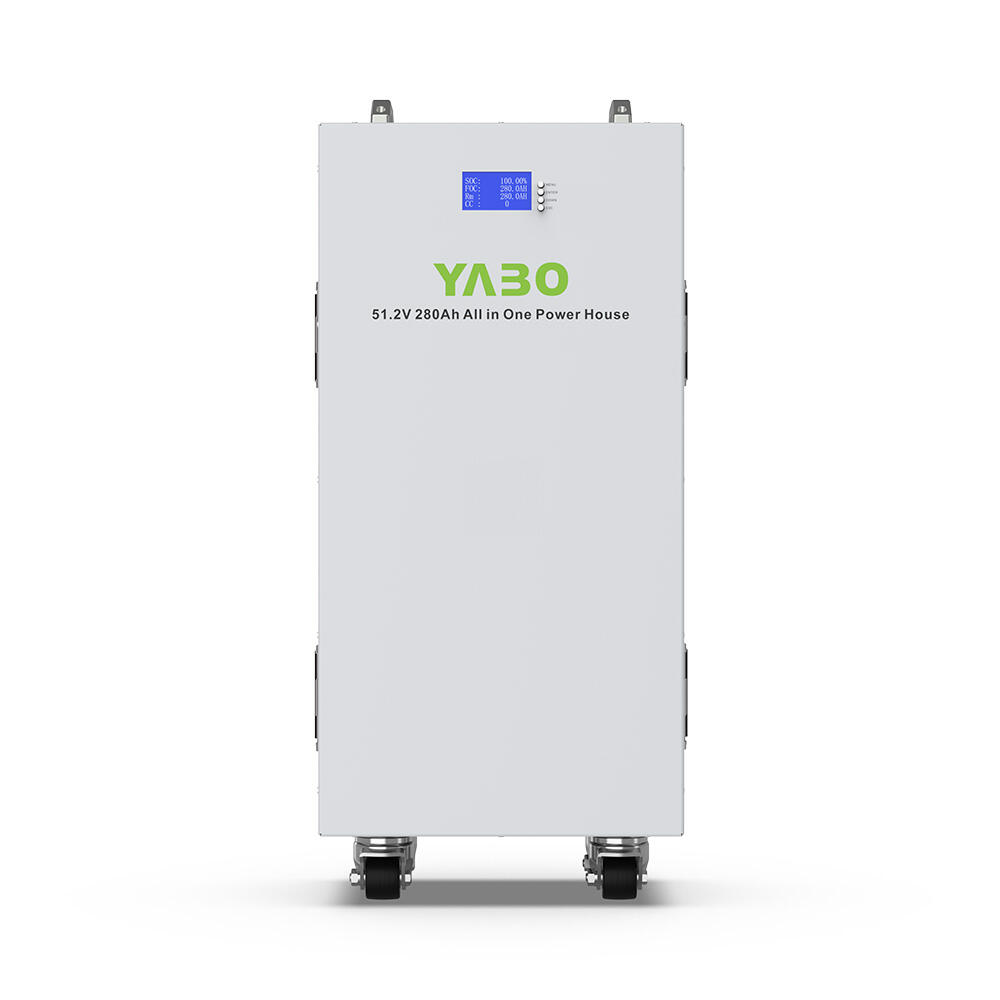
Large buildings — whether office towers, hospitals, hotels, manufacturing facilities, or university campuses — consume electricity on a scale where even marginal inefficiencies translate into significant financial losses. An energy storage battery does not merely provide a backup power source; it fundamentally reshapes how a building interacts with the utility grid and manages its own energy flow. By intelligently charging and discharging stored electricity, these systems target the highest-cost elements of a commercial energy bill and reduce them systematically over time.
Understanding How Energy Bills Work for Large Buildings
The Two Major Cost Drivers: Consumption and Demand Charges
Before exploring how an energy storage battery reduces costs, it is important to understand what actually drives large building energy bills. Most commercial utility rates include two primary components: energy consumption charges, measured in kilowatt-hours, and demand charges, measured by the peak kilowatt draw during any 15- or 30-minute interval within a billing cycle. For large buildings, demand charges can represent anywhere from 30% to 50% of the total electricity bill.
Demand charges are calculated based on the single highest power draw recorded during the billing period. This means that even one brief surge — such as HVAC systems and elevators all running simultaneously on a hot afternoon — can significantly inflate costs for the entire month. An energy storage battery system addresses this vulnerability directly by supplementing grid power during those high-draw moments, effectively flattening the demand curve and reducing the peak that gets billed.
Time-of-use pricing, which many utilities apply to commercial accounts, adds another layer of complexity. Electricity rates during peak hours — typically midday to early evening on weekdays — can be three to five times higher than off-peak rates. Buildings that rely entirely on the grid during these windows pay premium prices for every kilowatt-hour consumed, making time-of-use management a critical opportunity for cost reduction.
Why Large Buildings Are Uniquely Positioned to Benefit
The larger the building, the more pronounced these cost drivers become. A small retail shop might see modest savings from an energy storage battery, but a hospital, data center, or large office complex operates at a scale where demand management becomes a strategic financial priority. These buildings often have predictable daily load patterns, making it much easier for battery systems to optimize charge and discharge cycles with precision.
Large buildings also tend to have longer operating hours, more sophisticated energy management infrastructure, and greater incentive to invest in technologies that deliver measurable returns over a multi-year horizon. The combination of high energy volume, predictable patterns, and significant demand exposure makes them ideal candidates for deploying an energy storage battery at scale.
Peak Shaving and Demand Charge Reduction
How Peak Shaving Works in Practice
Peak shaving is the most immediate and financially impactful mechanism through which an energy storage battery reduces costs for large buildings. The system is programmed — either manually or through an intelligent energy management system — to monitor real-time power consumption and automatically discharge stored electricity when building demand approaches a predetermined threshold. By injecting battery power into the building's circuits at the right moment, the system prevents the peak from reaching a higher level that would be recorded by the utility meter.
Consider a large office building that typically experiences a demand peak of 500 kW between 2 PM and 4 PM due to cooling loads and occupant activity. If the utility's demand charge is $15 per kW per month, that single peak drives a $7,500 monthly demand charge. By deploying an energy storage battery that discharges 100 kW during that window, the peak is reduced to 400 kW, cutting the demand charge to $6,000 — a saving of $1,500 per month purely from peak shaving.
The precision of modern battery management systems means that peak shaving can be applied dynamically across multiple daily peaks, not just the single highest one. This continuous optimization ensures that demand charges are minimized across the entire billing cycle rather than just during one anticipated event.
Integration with Building Automation Systems
An energy storage battery achieves its highest efficiency when it is integrated with a building's existing automation and energy management infrastructure. When the battery system can communicate with HVAC controllers, lighting systems, and elevator management platforms, it gains the ability to anticipate load increases and pre-emptively begin discharging before a peak forms. This proactive approach is far more effective than reactive discharge, which may activate too late to prevent the peak from registering.
Modern LiFePO4-based energy storage battery systems, such as the energy storage battery solutions available for building applications, support integration with standard communication protocols, making them compatible with most commercial building automation platforms. This connectivity enables sophisticated scheduling, remote monitoring, and continuous performance optimization without requiring constant manual intervention from facility staff.
Time-of-Use Arbitrage and Off-Peak Charging
Buying Low and Using High
Time-of-use arbitrage is the second major cost-reduction mechanism enabled by an energy storage battery. The logic is straightforward: charge the battery during off-peak hours when electricity rates are at their lowest, then discharge that stored energy during peak hours when rates are highest. For large buildings on commercial time-of-use tariffs, this strategy can generate substantial savings every single day.
In many utility markets, off-peak electricity rates are available late at night and on weekends, while peak rates apply during working hours on weekdays. An energy storage battery system configured for time-of-use arbitrage will automatically begin charging at midnight or early morning, store that low-cost electricity, and then dispatch it during the afternoon peak. The financial benefit is essentially the difference between the peak and off-peak rate, multiplied by the volume of energy shifted each day.
For a large building with a 100 kWh daily arbitrage opportunity and a $0.15 per kWh rate differential, the daily saving is $15 — which compounds to $450 per month and $5,400 per year from this strategy alone. When combined with peak shaving, the cumulative annual savings from a single well-deployed energy storage battery system can justify the capital investment within a competitive payback period.
Seasonal and Weather-Driven Optimization
Large buildings in climates with hot summers or cold winters experience dramatic seasonal swings in energy demand. An energy storage battery system can be programmed with seasonal charge-discharge profiles that anticipate these patterns. During a summer heat wave, for instance, the system might increase its stored capacity going into the afternoon hours, knowing that cooling loads will drive both consumption and demand charges to their annual highs.
Some advanced energy management systems can pull in weather forecast data and adjust battery dispatch schedules proactively. This predictive capability ensures that the energy storage battery is always prepared for the conditions that will generate the highest cost exposure, rather than simply reacting to what has already happened. Over a full year, this level of optimization meaningfully improves the financial return of the system.
Renewable Energy Integration and Self-Consumption
Maximizing On-Site Solar Generation
Many large buildings are increasingly pairing rooftop solar installations with an energy storage battery to maximize the value of their renewable energy investment. Solar panels generate electricity most abundantly during daylight hours, but peak generation often does not align perfectly with peak building demand — and excess generation fed back to the grid is typically compensated at much lower rates than retail electricity prices. A battery system bridges this gap by storing surplus solar generation and releasing it when the building needs it most.
Without an energy storage battery, a large building with a 200 kW solar array might export significant amounts of midday generation to the grid at a low feed-in tariff, while still purchasing expensive grid electricity during the late afternoon peak. By adding battery storage, that solar energy is captured, stored, and deployed precisely when it delivers the highest financial value — reducing both consumption costs and demand charges simultaneously.
This strategy, known as solar self-consumption optimization, effectively increases the financial return on a building's solar investment without requiring additional panel capacity. The energy storage battery acts as the missing link that makes solar generation truly economical for large commercial buildings operating under time-of-use tariffs.
Grid Independence and Resilience Benefits
Beyond direct cost savings, an energy storage battery contributes to a building's energy resilience by providing a buffer against short-term grid outages. For commercial operations where downtime carries significant financial consequences — hospitals, data centers, manufacturing lines — the ability to maintain critical systems during a grid interruption has tangible economic value.
Resilience benefits are not always quantified in simple financial models, but they represent a real risk-reduction value that responsible facility managers should factor into their total cost of ownership analysis. An energy storage battery system that also provides backup capability delivers a dual-value proposition: routine cost savings through arbitrage and peak shaving, plus insurance-like protection against costly operational disruptions.
Long-Term Financial Returns and Payback Considerations
Evaluating Total Cost of Ownership
When evaluating the financial case for an energy storage battery in a large building, a total cost of ownership approach is more meaningful than focusing on upfront capital cost alone. The relevant factors include the initial system cost, installation and commissioning expenses, ongoing maintenance requirements, battery cycle life, and the cumulative annual savings generated through peak shaving, arbitrage, and solar self-consumption.
LiFePO4 battery chemistry, which is widely adopted in commercial energy storage battery systems, is particularly well-suited for large building applications because of its long cycle life — typically 3,000 to 6,000 full charge-discharge cycles — and its strong thermal stability. A system that cycles once daily at commercial rates can deliver a decade or more of reliable service, spreading the capital cost over a long operational period and improving the overall financial case.
It is also important to account for incentives, rebates, and utility programs that may be available to commercial building owners who deploy battery storage. Many jurisdictions offer demand response programs that pay building owners to make their stored capacity available to the grid during periods of grid stress, adding another revenue stream on top of direct bill savings.
Scalability and Phased Deployment Strategies
One of the practical advantages of modern energy storage battery systems is their modular, scalable architecture. Large buildings do not necessarily need to deploy their entire target capacity in a single capital expenditure event. Many systems are designed to allow phased expansion, starting with a capacity that addresses the most financially impactful use case — typically demand charge reduction — and adding capacity over time as budgets allow and financial returns are demonstrated.
This flexibility makes an energy storage battery investment accessible to a wider range of building owners and operators, including those with conservative capital allocation processes. A pilot deployment in one building within a portfolio can generate performance data that builds the internal business case for wider rollout, reducing the perceived risk of the investment.
Facility managers who take a phased approach should ensure that the systems they select are designed for modular expansion from the outset. Retrofitting a system that was not originally designed for scalability can introduce compatibility issues and unnecessary costs that erode the financial return of the overall program.
FAQ
How quickly can a large building expect to see cost savings after installing an energy storage battery?
Most large buildings begin seeing measurable reductions in demand charges from the very first full billing cycle after the energy storage battery system is commissioned and properly configured. The magnitude of savings depends on the building's specific load profile, the system capacity deployed, and the utility tariff structure in place. Full optimization of arbitrage and solar self-consumption strategies may take a few months as the energy management system collects operational data and refines its dispatch scheduling.
What size energy storage battery system is typically needed for a large commercial building?
System sizing for a large commercial building depends on the target use case and the building's peak demand profile. For demand charge reduction alone, the battery needs to be sized to cover the expected demand surplus for the duration of the peak window — often 30 minutes to two hours. For time-of-use arbitrage or solar self-consumption, larger capacity is generally more beneficial. An energy storage battery system in the range of 100 kWh to several megawatt-hours is common for large commercial applications, though modular designs allow installations to begin at smaller scales and expand over time.
Is an energy storage battery system compatible with an existing solar installation on a large building?
Yes, an energy storage battery system can be integrated with most existing solar installations, provided the system is configured with compatible inverter technology. AC-coupled configurations allow a battery to be added to a building with an existing grid-tied solar system without replacing the original inverter. DC-coupled configurations, which are typically more efficient, may require a hybrid inverter but offer tighter integration between the solar panels and the battery. A qualified energy systems integrator can assess the best approach for each specific installation.
How does an energy storage battery system handle situations where the building's demand unexpectedly spikes beyond what the battery can cover?
An energy storage battery system does not replace the grid connection — it works alongside it. In situations where building demand exceeds both the battery's discharge capacity and the pre-configured peak shaving threshold, the grid simply supplies the additional load. The battery's role is to reduce the peak that gets recorded, not to eliminate grid dependency entirely. Properly sized and programmed systems account for typical demand variability, and most energy management platforms allow operators to configure conservative thresholds that provide a safety margin against unexpected surges.
Table of Contents
- Understanding How Energy Bills Work for Large Buildings
- Peak Shaving and Demand Charge Reduction
- Time-of-Use Arbitrage and Off-Peak Charging
- Renewable Energy Integration and Self-Consumption
- Long-Term Financial Returns and Payback Considerations
-
FAQ
- How quickly can a large building expect to see cost savings after installing an energy storage battery?
- What size energy storage battery system is typically needed for a large commercial building?
- Is an energy storage battery system compatible with an existing solar installation on a large building?
- How does an energy storage battery system handle situations where the building's demand unexpectedly spikes beyond what the battery can cover?