
 EN
EN
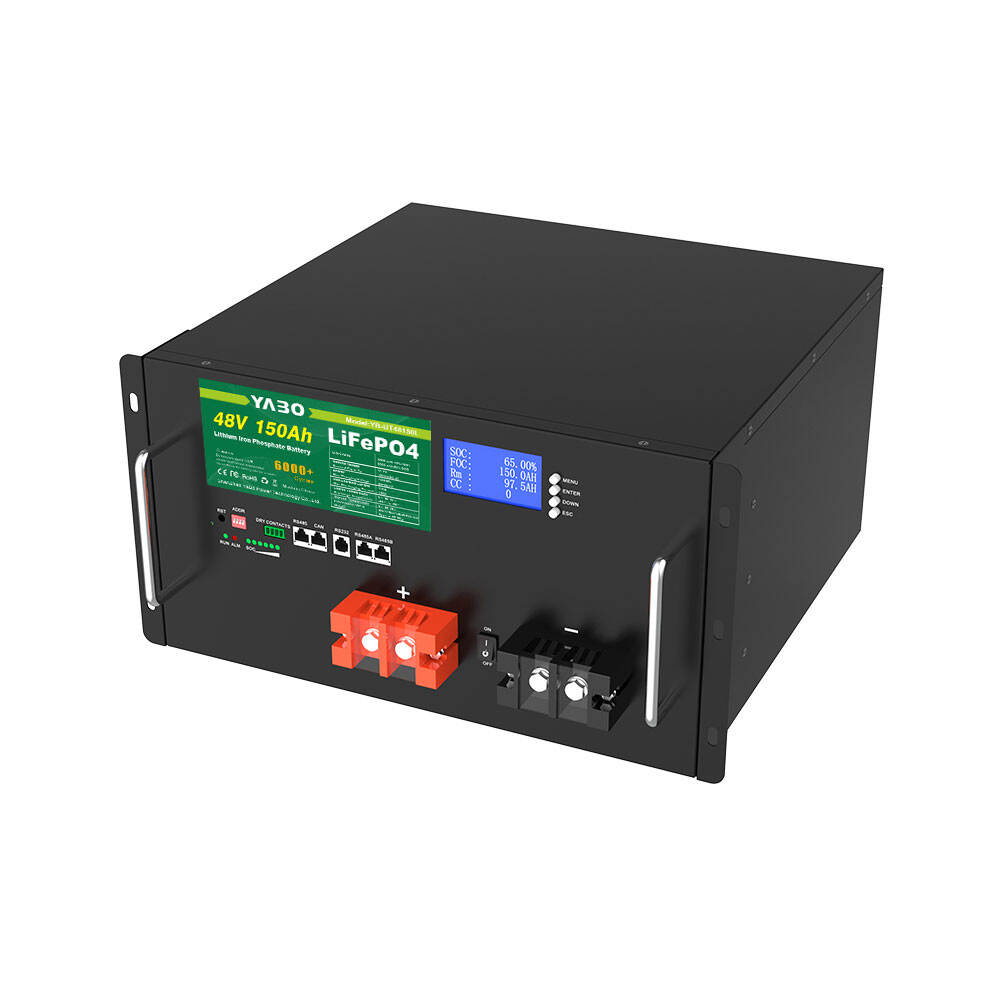
Understanding which Battery Management System features directly impact the safety and longevity of 12-volt lithium-ion battery packs has become essential for manufacturers, system integrators, and end users across industries ranging from recreational vehicles to renewable energy storage. The 12V lithium battery BMS serves as the central intelligence that monitors, protects, and optimizes battery performance throughout its operational lifecycle. While many buyers focus primarily on capacity ratings and discharge rates, the sophistication and reliability of the BMS architecture often determines whether a lithium battery system delivers its promised cycle life or fails prematurely due to thermal runaway, cell imbalance, or voltage abuse. This comprehensive examination explores the specific BMS characteristics that separate robust, long-lasting lithium battery solutions from those that compromise on protection to reduce costs.
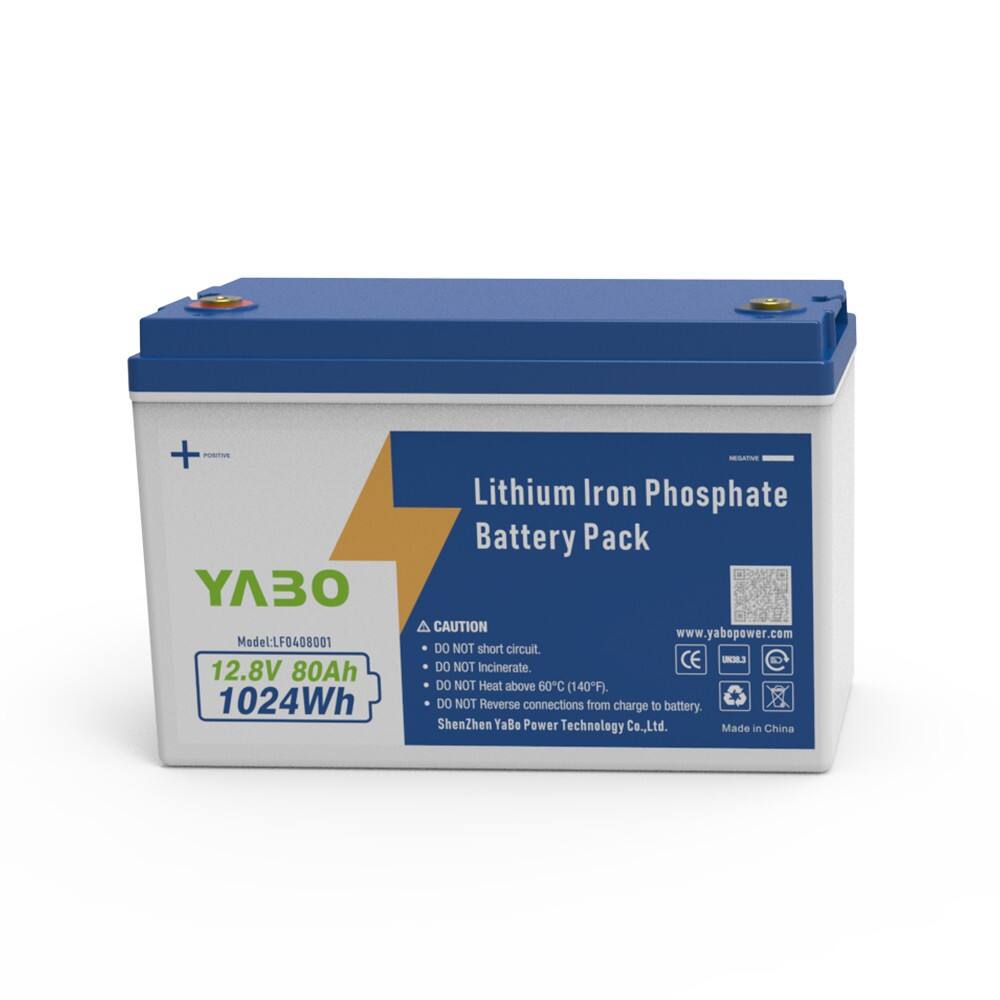
The distinction between basic protection circuits and advanced battery management systems reveals itself most clearly under stress conditions that occur during real-world operation rather than in controlled laboratory testing. When selecting or specifying lithium battery systems for mission-critical applications, procurement professionals must evaluate BMS capabilities against specific operational scenarios including extreme temperature exposure, high-rate charging demands, prolonged storage periods, and mechanical shock conditions. The following analysis identifies the technical features that provide measurable improvements in safety margins and calendar life extension, supported by engineering principles that govern lithium-ion cell behavior and degradation mechanisms inherent to phosphate and oxide cathode chemistries commonly deployed in twelve-volt battery configurations.
Critical Protection Functions That Prevent Catastrophic Battery Failure
Overvoltage and Undervoltage Cutoff Precision
The accuracy and response speed of voltage monitoring circuits within a 12V lithium battery BMS directly determines how effectively the system prevents cell damage from charging beyond safe limits or discharging into voltage ranges that accelerate capacity fade. Lithium iron phosphate cells typically operate safely between 2.5 and 3.65 volts per cell, meaning a four-series configuration requires precise cutoff thresholds at approximately 14.6 volts maximum and 10.0 volts minimum for the complete pack. Advanced BMS architectures employ dedicated monitoring integrated circuits that sample individual cell voltages at rates exceeding one hundred measurements per second, enabling the system to detect voltage excursions within milliseconds and activate protective disconnection before irreversible chemical changes occur within the electrode structures.
The difference between consumer-grade and industrial-grade voltage protection lies not only in threshold accuracy but also in the consistency of those thresholds across temperature ranges and aging cycles. Temperature coefficients affect both the lithium cell chemistry and the semiconductor components within the BMS, potentially shifting protection thresholds by fifty to one hundred millivolts across the operating temperature spectrum. High-quality battery management systems incorporate temperature compensation algorithms that adjust protection setpoints based on measured pack temperature, ensuring that voltage limits remain appropriate whether the battery operates in freezing conditions or elevated ambient temperatures. This adaptive protection approach prevents both the safety risks associated with overvoltage conditions and the premature capacity loss caused by excessively deep discharge events that can occur when fixed voltage thresholds fail to account for temperature-dependent electrochemical behavior.
Overcurrent Protection Across Charge and Discharge Modes
Current monitoring capabilities within the BMS determine how effectively the system protects cells from metallurgical damage caused by excessive charge rates or thermal stress resulting from sustained high-discharge demands. The 12V lithium battery BMS must differentiate between brief current surges that fall within acceptable cell specifications and sustained overcurrent conditions that elevate internal temperatures to levels that accelerate aging mechanisms or potentially trigger thermal runaway sequences. Sophisticated current sensing implementations utilize low-resistance shunt resistors positioned in the main current path, combined with high-precision differential amplifiers that maintain measurement accuracy across the full operating current range while minimizing parasitic losses that reduce system efficiency.
Implementation quality varies significantly across BMS designs, with basic protection circuits offering only crude current limiting through fixed-threshold comparators, while advanced systems provide configurable current limits with programmable delay periods that distinguish between startup transients and genuine fault conditions. Marine applications and recreational vehicle installations frequently experience momentary current spikes during motor starting or inverter activation that should not trigger protective disconnection, yet sustained overcurrent from short circuits or component failures must activate protection within microseconds to prevent conductor damage or fire hazards. The most capable battery management architectures incorporate intelligent current profiling that learns normal operational patterns and applies statistical analysis to differentiate between expected transient events and abnormal conditions requiring immediate intervention, substantially reducing nuisance disconnections while maintaining robust protection against genuine hazards.
Short Circuit Detection and Isolation Speed
The response time between short circuit detection and complete current path interruption represents perhaps the most critical safety parameter within any 12V lithium battery BMS, as short circuit currents in lithium systems can reach hundreds or even thousands of amperes within the first millisecond of fault initiation. Physical separation devices including mechanical contactors provide reliable isolation but operate too slowly for short circuit protection, typically requiring ten to fifty milliseconds to fully open the current path. Modern BMS designs therefore incorporate semiconductor switching devices such as metal-oxide-semiconductor field-effect transistors that can interrupt current flow within single-digit microseconds when driven by dedicated short circuit detection comparators operating independently of the primary microcontroller to eliminate software processing delays.
The energy rating of these protection semiconductors must accommodate the brief but extreme power dissipation that occurs during short circuit interruption, requiring careful thermal design and appropriate semiconductor selection to ensure the protection devices themselves survive the fault clearing process without degradation. Redundant protection topologies that combine fast-acting semiconductor switches with backup mechanical disconnection provide defense-in-depth architecture appropriate for applications where battery failure could result in significant property damage or safety consequences. Industrial battery systems increasingly specify dual-level short circuit protection as a mandatory requirement, recognizing that the incremental cost of redundant protection devices represents negligible expense compared to the potential liability associated with thermal events or fire incidents resulting from protection system failure during actual short circuit conditions.
Cell Balancing Technologies and Their Impact on Capacity Retention
Passive Versus Active Balancing Methodologies
Cell balancing functionality within the 12V lithium battery BMS addresses the inevitable capacity and impedance variations that develop between individual cells within series-connected strings, variations that progressively worsen throughout the operational lifetime as cells age at different rates due to position-dependent temperature profiles and manufacturing tolerances. Passive balancing implementations dissipate excess energy from higher-voltage cells as heat through parallel-connected resistors, gradually bringing cell voltages into alignment during charge cycles without recovering the energy differential. This approach offers simplicity and cost advantages but proves inefficient in systems with significant cell mismatch, as the balancing energy converts entirely to waste heat rather than contributing to useful capacity.
Active balancing architectures employ capacitive or inductive energy transfer circuits that shuttle charge from higher-voltage cells to lower-voltage cells, recovering the energy differential rather than dissipating it as heat. This methodology provides substantially faster balancing rates and eliminates the thermal management burden associated with dissipative balancing, though at increased circuit complexity and component cost. The practical benefit of active balancing becomes most apparent in larger capacity systems where cell mismatch accumulates to represent significant unusable capacity if left unaddressed. For twelve-volt battery packs in the fifty to one hundred amp-hour capacity range, active balancing can recover several percent of nominal capacity that would otherwise remain inaccessible due to premature voltage cutoff triggered by the weakest cell in the series string, directly translating to extended runtime between recharge cycles throughout the battery's operational life.
Balancing Current Capacity and Operational Timing
The magnitude of balancing current available within the BMS circuit determines how quickly the system can correct cell voltage discrepancies and maintain optimal pack balance as cells continue to drift throughout their service life. Entry-level BMS designs typically provide fifty to one hundred milliamperes of balancing current per cell, requiring extended periods of charging to correct even modest voltage imbalances. Professional-grade battery management systems deliver balancing currents ranging from two hundred milliamperes to over one ampere per cell, enabling meaningful balance correction during typical charge cycles and preventing the progressive capacity loss that occurs when weak cells repeatedly trigger pack-level undervoltage protection before stronger cells have fully discharged.
Equally important to the magnitude of balancing current is the operational logic that controls when balancing occurs and which cells receive balancing attention during different phases of battery operation. Sophisticated BMS implementations monitor cell impedance characteristics in addition to voltage, using impedance data to predict which cells will reach voltage limits first during subsequent discharge cycles and proactively managing cell balance to maximize available pack capacity. Some advanced 12V lithium battery BMS architectures perform balancing operations during discharge as well as charge periods, continuously optimizing cell relationships rather than waiting for charge cycles to correct imbalances that develop during use. This continuous balancing approach proves particularly valuable in applications with infrequent or incomplete charge cycles, such as solar energy storage systems that may experience extended periods of partial state-of-charge operation without regular full charge cycles that would normally provide balancing opportunities.
State of Charge Tracking Precision Across Operating Conditions
Accurate state of charge estimation enables the BMS to provide meaningful remaining capacity information to users and system controllers while also supporting sophisticated charge termination algorithms that prevent both incomplete charging and overcharge conditions. The 12V lithium battery BMS must synthesize information from multiple sources including coulomb counting of integrated current flow, open-circuit voltage correlation, and impedance spectroscopy techniques to maintain state of charge accuracy within single-digit percentage points across the full operating envelope. Temperature-dependent capacity effects complicate this estimation process, as lithium cell capacity varies by twenty to forty percent between freezing and elevated operating temperatures, meaning accurate state of charge tracking requires continuous temperature compensation of capacity estimates.
Battery management systems that rely solely on voltage-based state of charge estimation suffer from significant inaccuracy during mid-range states of charge where lithium iron phosphate chemistry exhibits relatively flat voltage profiles that provide minimal discrimination between different capacity levels. Hybrid estimation algorithms that combine coulomb counting for short-term accuracy with periodic voltage-based recalibration during rest periods provide superior state of charge tracking across diverse usage patterns. The practical benefit of precise state of charge information extends beyond user convenience to encompass fundamental battery longevity, as systems that accurately track and communicate remaining capacity reduce the likelihood of unintentional deep discharge events that disproportionately accelerate calendar aging and permanent capacity loss in lithium cells.
Thermal Management Features for Longevity and Safety
Multi-Point Temperature Monitoring Distribution
The spatial distribution and quantity of temperature sensors integrated within the battery management architecture determines how effectively the system can detect localized thermal anomalies that may indicate cell degradation, connection resistance development, or early-stage failure progression. Minimum viable 12V lithium battery BMS implementations incorporate a single temperature sensor positioned near the cell group, providing crude thermal awareness but offering no ability to detect temperature differentials between individual cells or identify specific cells experiencing elevated self-heating due to internal short circuits or impedance rise. Professional battery systems distribute multiple temperature sensors throughout the pack volume, monitoring individual cell temperatures or at minimum tracking thermal conditions at both ends of the series string and the geometric center of the pack assembly.
The value of distributed temperature monitoring becomes apparent during thermal fault propagation scenarios where an individual cell begins excessive self-heating due to internal separator degradation or dendritic lithium formation. A single-sensor BMS may not detect this localized temperature rise until adjacent cells have also begun heating and the thermal event has progressed beyond the point where protective disconnection can prevent cascading failure. Multi-sensor architectures detect temperature anomalies at the individual cell level, enabling early intervention before neighboring cells become thermally compromised. Temperature differential monitoring also supports more sophisticated cooling system control in applications that incorporate active thermal management, directing cooling resources to specific zones within the battery pack that exhibit elevated temperatures rather than applying uniform cooling to the entire assembly.
Temperature-Compensated Protection Thresholds
Static temperature cutoff thresholds provide crude protection against thermal abuse but fail to account for the rate of temperature change that often indicates more about fault severity than absolute temperature values. A battery pack gradually warming to fifty degrees Celsius during high-rate discharge in elevated ambient conditions represents normal operation, while the same fifty-degree temperature reached through rapid heating over several seconds likely indicates an internal fault requiring immediate disconnection. Advanced BMS thermal protection algorithms evaluate both absolute temperature thresholds and thermal rate-of-change criteria, distinguishing between expected thermal responses to operational demands and abnormal heating patterns characteristic of internal cell faults or external thermal abuse conditions.
Temperature compensation extends beyond protection thresholds to encompass charge algorithm modification based on measured pack temperature. Lithium-ion cells accept significantly reduced charge current at temperatures below freezing due to increased electrolyte viscosity and reduced lithium-ion mobility, yet many basic BMS designs continue attempting full-rate charging regardless of temperature, accelerating lithium plating on graphite anodes and permanently degrading cell capacity. Quality 12V lithium battery BMS implementations reduce maximum charge current proportionally as temperature decreases, potentially reducing charge acceptance to ten or twenty percent of nominal rates when operating near freezing temperatures. This thermal-adaptive charging substantially extends cycle life in applications that experience regular cold-temperature operation, preventing the cumulative metallurgical damage that occurs when lithium metal deposits remain on anode surfaces rather than intercalating properly into the graphite structure during cold-temperature charging.
Thermal Runaway Prevention Through Predictive Monitoring
Beyond reactive thermal protection that disconnects battery systems after detecting elevated temperatures, sophisticated BMS architectures incorporate predictive thermal modeling that forecasts pack temperatures under current operating conditions and proactively limits charge or discharge rates before thermal limits are approached. This predictive approach maintains system availability while protecting against thermal stress, particularly valuable in applications where protective disconnection creates operational disruptions or safety concerns. The thermal model within the BMS incorporates parameters including ambient temperature, current thermal state, present charge or discharge rate, and recent thermal history to calculate projected pack temperatures across various time horizons ranging from minutes to hours.
When the thermal prediction indicates that continued operation at present rates will result in excessive temperatures within the forecast period, the BMS progressively reduces maximum allowable current rather than waiting to implement emergency disconnection after temperatures have already reached critical levels. This graduated response maintains partial system functionality while preventing thermal abuse, proving particularly valuable in electric vehicle and material handling applications where complete loss of power creates hazardous operating conditions. The sophistication of thermal prediction algorithms varies substantially across BMS implementations, with advanced systems incorporating machine learning techniques that refine thermal models based on observed pack behavior over time, gradually improving prediction accuracy through operational experience rather than relying solely on predetermined thermal coefficients that may not perfectly match actual pack characteristics in specific installation environments.
Communication Capabilities and Diagnostic Information Access
Standardized Protocol Support for System Integration
The communication interfaces implemented within the 12V lithium battery BMS determine how effectively the battery system integrates with external charging equipment, load controllers, and monitoring systems that require real-time battery status information. Basic BMS designs provide no external communication capability beyond simple voltage presence signals, forcing system integrators to develop custom monitoring solutions or operate without detailed battery insight. Industrial battery systems increasingly specify standardized communication protocol support including CAN bus, RS485, or Bluetooth connectivity that enables plug-and-play integration with compatible equipment and provides access to comprehensive operational data including individual cell voltages, temperatures, current flow, state of charge, and fault history.
The depth of information accessible through BMS communication interfaces varies significantly across implementations, with entry-level systems providing only summary pack status while professional designs expose complete internal operational parameters for diagnostic and optimization purposes. Access to individual cell voltages enables system operators to identify developing balance issues before they significantly impact pack capacity, while historical fault logging supports root cause analysis when protection events occur. Advanced battery management systems incorporate data logging capabilities that record operational parameters throughout battery lifetime, creating comprehensive history that supports warranty analysis, predictive maintenance scheduling, and application optimization based on actual usage patterns rather than theoretical specifications.
Remote Monitoring and Predictive Maintenance Enablement
Network connectivity within modern BMS architectures enables remote monitoring of distributed battery installations, substantially reducing the operational overhead associated with maintaining geographically dispersed energy storage systems. Cloud-connected 12V lithium battery BMS implementations transmit operational data and fault notifications to centralized monitoring platforms that can oversee hundreds or thousands of individual battery systems, alerting maintenance personnel to developing issues before they progress to complete failures. This remote visibility proves particularly valuable for solar energy storage installations, telecommunications backup power systems, and other applications where individual battery sites may lack on-site technical staff but require high reliability.
Predictive maintenance algorithms analyze the operational data streams from BMS-equipped battery systems to identify degradation trends that indicate approaching end-of-life conditions or developing faults that require intervention. Gradual increases in cell impedance, progressive capacity fade beyond expected aging rates, or developing temperature differentials between cells all provide early warning of potential issues that, if addressed proactively, may extend system life or prevent unexpected failures. The economic value of predictive maintenance becomes substantial in applications where battery failure results in operational disruption costs far exceeding battery replacement expenses, justifying investment in sophisticated BMS hardware with comprehensive communication and diagnostic capabilities that enable condition-based maintenance rather than reactive replacement after failure occurs.
Firmware Updateability for Feature Enhancement and Issue Resolution
The ability to update BMS firmware through communication interfaces without physical hardware modification enables manufacturers to enhance functionality, correct operational issues, and adapt battery behavior to evolving application requirements throughout system life. Fixed-function BMS designs with non-updateable firmware provide no path for addressing software defects discovered after deployment or incorporating improved algorithms as battery technology advances. Updateable battery management systems support remote firmware deployment that can address entire fleets of deployed batteries simultaneously, substantially reducing the operational burden and technical risk associated with maintaining large populations of energy storage systems across extended service periods.
Security considerations accompany firmware update capability, as unauthorized modification of BMS software could potentially compromise protection functions or enable battery operation outside safe parameters. Professional BMS implementations incorporate cryptographic authentication mechanisms that verify firmware authenticity before permitting updates, preventing malicious or accidental installation of unauthorized code. The balance between update flexibility and security protection represents a critical design consideration for 12V lithium battery BMS architectures intended for safety-critical applications where firmware manipulation could create hazardous operating conditions. Robust update frameworks incorporate multiple verification stages, rollback capabilities to restore previous firmware versions if updates fail, and comprehensive logging of all firmware modification events to maintain audit trails for quality management and liability purposes.
Mechanical Robustness and Environmental Protection Standards
Vibration and Shock Tolerance for Mobile Applications
Battery management systems deployed in recreational vehicles, marine vessels, and material handling equipment experience mechanical stress environments far more severe than stationary installations, requiring robust component selection and mechanical design to ensure reliable operation throughout expected service life. Automotive-grade component specifications mandate shock tolerance exceeding fifty gravities and vibration resistance across frequencies from ten to two thousand Hertz, standards that consumer-grade electronic components typically fail to meet. The 12V lithium battery BMS must maintain electrical connections and mechanical integrity throughout repeated thermal cycling and mechanical loading that would quickly fatigue solder joints, connector terminals, and circuit board assemblies constructed using consumer-grade materials and assembly processes.
Conformal coating application over circuit board assemblies provides moisture protection and mechanical reinforcement that extends BMS reliability in harsh operating environments. This protective coating prevents corrosion of circuit traces and component leads when batteries operate in high-humidity conditions or experience occasional water exposure during cleaning or weather events. Quality battery management system assemblies utilize military-grade conformal coating materials applied through controlled processes that ensure complete coverage without component interference, providing environmental protection without compromising thermal dissipation or component serviceability. The incremental cost of proper conformal coating represents minimal expense relative to total battery system value while substantially reducing field failure rates attributable to environmental degradation of electronic assemblies.
Ingress Protection Ratings for Dust and Moisture Exclusion
The IP rating assigned to battery management system enclosures indicates the degree of protection against solid particle intrusion and moisture ingress, critical parameters for applications that expose batteries to contaminated or wet operating environments. An IP65-rated BMS enclosure provides complete dust exclusion and protection against water jets from any direction, appropriate for batteries installed in equipment wash-down areas or exposed exterior mounting locations. Lower IP ratings including IP54 or IP40 offer reduced protection adequate for relatively clean, dry interior installations but insufficient for demanding industrial or outdoor applications where dust accumulation or water exposure occurs regularly.
Achieving high ingress protection ratings requires careful attention to enclosure seal design, cable entry methodology, and connector selection throughout the BMS assembly. Unsealed wire penetrations, poorly designed enclosure gaskets, or consumer-grade connectors without environmental sealing create moisture ingress paths that compromise the intended protection level regardless of enclosure IP rating. Professional 12V lithium battery BMS implementations utilize sealed cable glands, environmental-grade connectors with positive seal verification, and multi-stage gasket systems that maintain seal integrity across the expected operating temperature range despite thermal expansion differences between enclosure materials. The durability of environmental protection over extended service periods depends substantially on gasket material selection and compression set resistance, as elastomer seals that take permanent compression set allow moisture and dust intrusion despite initially meeting IP rating requirements.
Operating Temperature Range and Thermal Derating Specifications
The specified operating temperature range for battery management system electronics determines application suitability across climate zones and installation environments ranging from frozen outdoor locations to engine compartment installations experiencing elevated ambient temperatures. Consumer-grade BMS designs typically specify operating ranges from zero to forty-five degrees Celsius, inadequate for most mobile equipment applications that regularly experience temperatures well beyond these limits. Industrial battery systems require BMS operating ranges spanning negative twenty to positive seventy degrees Celsius or broader, ensuring reliable protection and monitoring across realistic environmental exposure without requiring dedicated thermal management of the BMS electronics separate from the battery cells themselves.
Thermal derating specifications define how BMS capabilities reduce at temperature extremes, information essential for system designers evaluating whether battery systems can deliver required performance under worst-case environmental conditions. Current handling capacity often decreases at elevated temperatures as semiconductor junction temperatures approach absolute maximum ratings, potentially requiring reduced maximum charge or discharge rates during high-ambient operation. Similarly, communication interface reliability may degrade at temperature extremes, affecting remote monitoring capability during precisely the conditions where enhanced oversight proves most valuable. Comprehensive 12V lithium battery BMS specifications include complete performance characterization across the operating temperature range rather than providing only nominal ratings, enabling proper system design that accounts for temperature-dependent capability variation throughout the operational envelope.
FAQ
What minimum balancing current should a quality 12V lithium battery BMS provide for adequate cell maintenance?
Professional-grade battery management systems should deliver at least two hundred milliamperes of balancing current per cell to effectively correct voltage imbalances during typical charge cycles. Systems providing only fifty to one hundred milliamperes may require extended charging periods to achieve proper balance, and may prove inadequate for correcting larger voltage differentials that develop as batteries age. Active balancing implementations can operate effectively with lower current levels than passive balancing due to their energy recovery capabilities, but even active systems benefit from higher current capacity for faster balance correction.
How many temperature sensors are necessary for safe operation of a twelve-volt lithium battery pack?
Minimum safe implementation requires at least two temperature sensors positioned at opposite ends of the cell series string to detect thermal gradients within the pack assembly. Optimal designs incorporate individual cell temperature monitoring or at minimum one sensor per two cells, enabling early detection of localized thermal anomalies that may indicate developing cell faults. Single-sensor implementations provide inadequate thermal awareness for professional applications, as they cannot detect individual cell temperature rise until thermal propagation has affected surrounding cells and the fault has progressed substantially.
Can firmware updates introduce safety risks into battery management system operation?
Improperly validated firmware updates can potentially compromise BMS protection functions if update processes lack adequate verification and testing protocols. However, professionally implemented update frameworks with cryptographic authentication, multi-stage verification, and rollback capabilities substantially reduce this risk while providing valuable capability to address software defects and enhance functionality throughout battery service life. The greater risk often lies in non-updateable BMS designs that provide no mechanism to correct software issues discovered after deployment, forcing continued operation with known defects or requiring complete hardware replacement to implement corrections.
What communication protocols are most widely supported for battery management system integration?
Controller Area Network bus and RS485 serial communication represent the most common standardized protocols for industrial battery system integration, with CAN bus particularly prevalent in automotive and mobile equipment applications. Bluetooth connectivity has gained adoption for consumer and light commercial applications requiring wireless monitoring without complex wiring installations. Professional installations increasingly specify multiple protocol support to ensure compatibility with diverse charging equipment and monitoring systems, with some advanced BMS designs incorporating protocol translation capabilities that enable simultaneous communication with equipment using different interface standards.
Table of Contents
- Critical Protection Functions That Prevent Catastrophic Battery Failure
- Cell Balancing Technologies and Their Impact on Capacity Retention
- Thermal Management Features for Longevity and Safety
- Communication Capabilities and Diagnostic Information Access
- Mechanical Robustness and Environmental Protection Standards
-
FAQ
- What minimum balancing current should a quality 12V lithium battery BMS provide for adequate cell maintenance?
- How many temperature sensors are necessary for safe operation of a twelve-volt lithium battery pack?
- Can firmware updates introduce safety risks into battery management system operation?
- What communication protocols are most widely supported for battery management system integration?