
 EN
EN
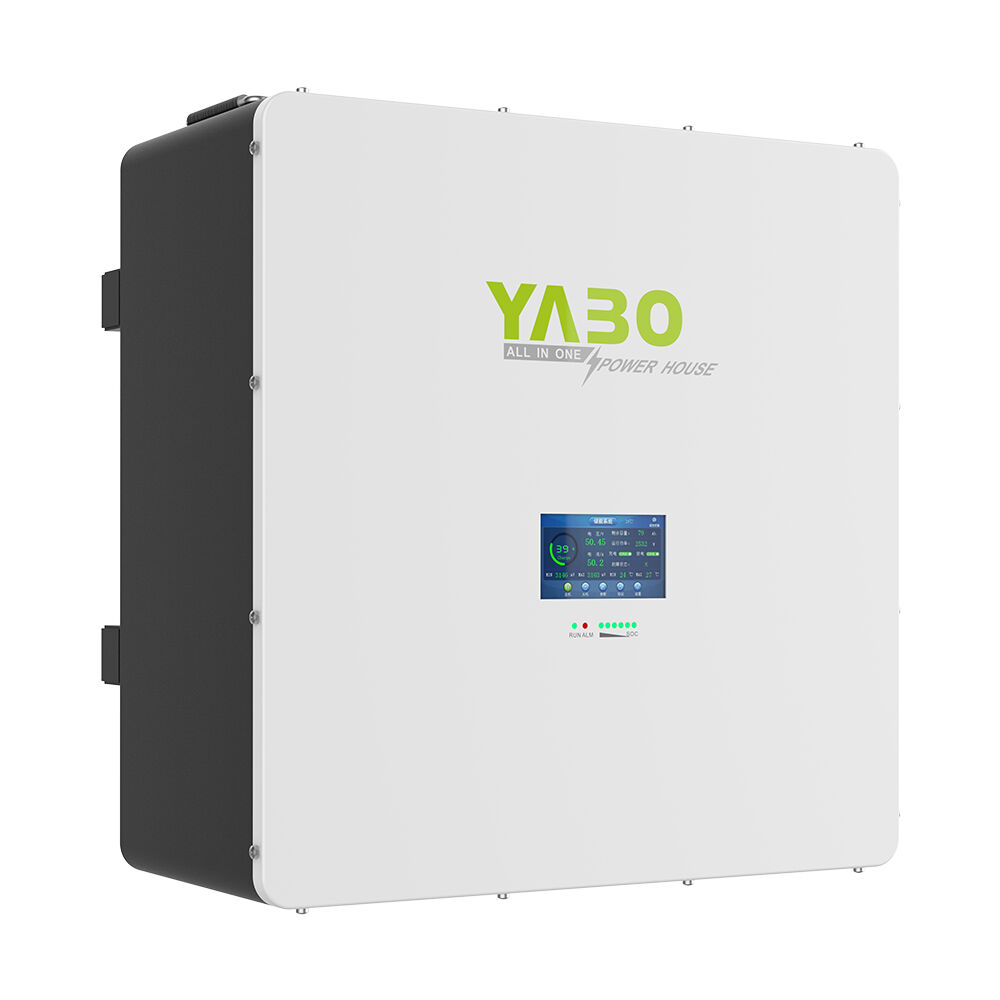
Original equipment manufacturers face critical decisions when integrating power solutions into their product lines, and selecting the right battery technology directly impacts product performance, reliability, and market competitiveness. For OEMs developing applications ranging from portable medical devices to industrial monitoring equipment, understanding the nuances of 12V Li-ion packs becomes essential to achieving optimal design outcomes and long-term commercial success. The procurement process involves far more than comparing voltage specifications and capacity ratings, requiring deep knowledge of chemistry variations, protection circuitry, lifecycle characteristics, and supply chain reliability factors that distinguish professional-grade solutions from commodity alternatives.
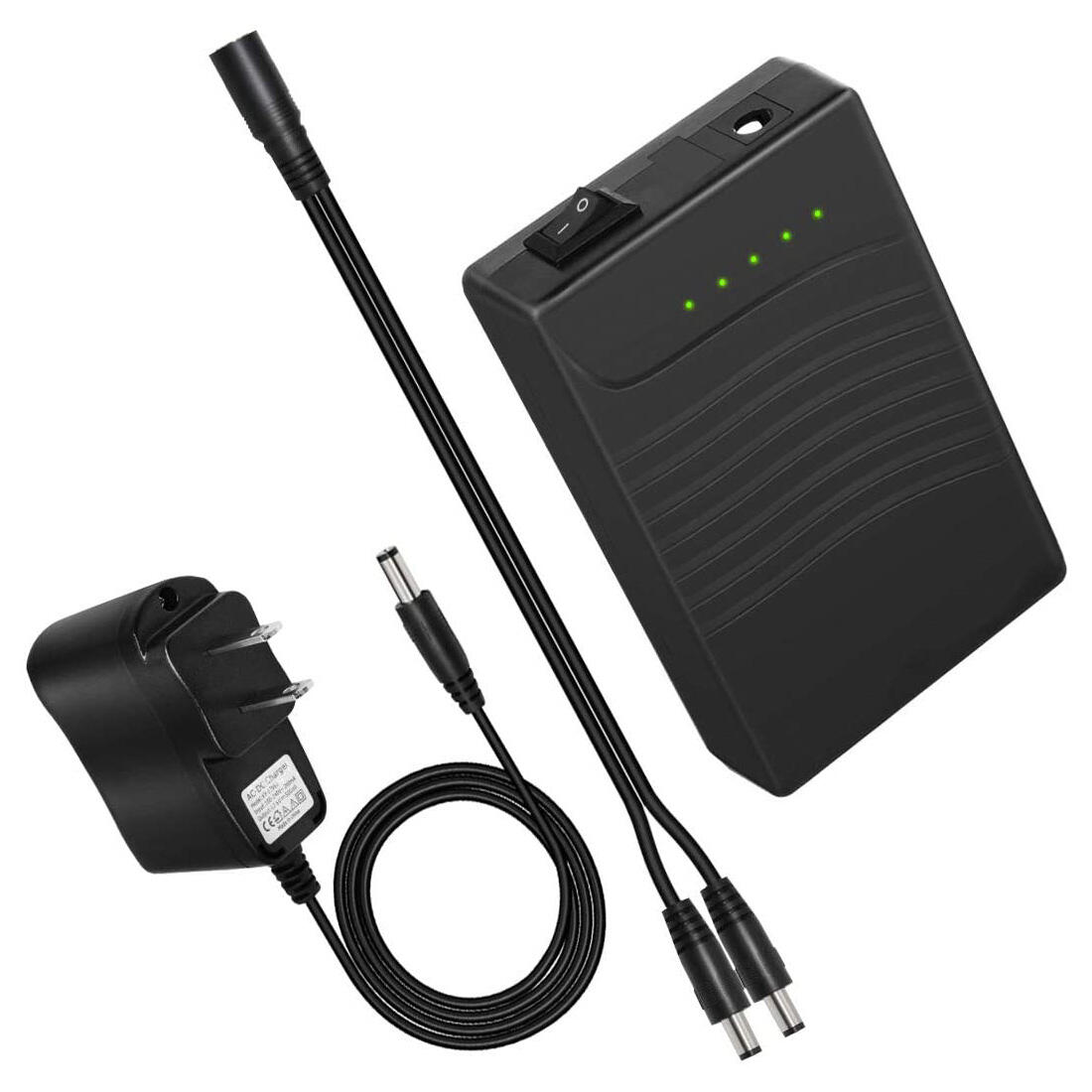
The shift from traditional lead-acid and nickel-based chemistries to lithium-ion technology represents a fundamental transformation in how OEMs approach power system design, offering dramatic improvements in energy density, weight reduction, and operational flexibility. However, this transition introduces new technical considerations that require systematic evaluation during the sourcing phase. OEMs must balance immediate cost pressures against total cost of ownership calculations, navigate complex certification requirements across different markets, and establish vendor relationships capable of supporting production scaling and long-term product support commitments that align with their strategic roadmap.
Understanding Cell Chemistry and Configuration Architecture
Lithium-Ion Chemistry Variants and Performance Implications
When sourcing 12V Li-ion packs, OEMs must first understand that lithium-ion is not a singular technology but rather an umbrella term encompassing multiple chemistry types with distinct characteristics. Lithium cobalt oxide cells deliver high energy density suitable for compact consumer applications but offer limited power output and shorter cycle life compared to alternatives. Lithium nickel manganese cobalt oxide chemistry provides balanced performance across energy density, power capability, and thermal stability, making it suitable for applications requiring moderate discharge rates and extended operational life.
Lithium iron phosphate chemistry deserves particular attention from OEMs prioritizing safety and longevity, as this variant demonstrates exceptional thermal stability, minimal risk of thermal runaway, and cycle life exceeding two thousand charge-discharge cycles under proper operating conditions. The tradeoff involves lower nominal cell voltage and reduced energy density compared to cobalt-based alternatives, which affects pack configuration and physical dimensions. OEMs developing medical equipment, industrial sensors, or mission-critical instrumentation often favor this chemistry despite the size penalty because field failure rates and warranty exposure carry greater weight than volumetric efficiency in their value equations.
Series-Parallel Configuration and Voltage Stability Considerations
Achieving a nominal twelve-volt output requires careful cell arrangement since individual lithium-ion cells typically deliver between 3.6 and 3.7 volts at their nominal operating point. Most 12V Li-ion packs employ a three-series configuration, connecting three cells in series to generate approximately 11.1 volts nominal, which equipment designers must account for when establishing voltage regulation requirements and input specifications. Some manufacturers implement four-series configurations yielding 14.8 volts nominal, which better matches traditional twelve-volt lead-acid replacement applications but introduces different charging and protection requirements that OEMs must carefully evaluate.
Parallel cell grouping within 12V Li-ion packs increases capacity and current delivery capability, with each parallel string contributing its full ampere-hour rating to the total pack capacity. OEMs must recognize that parallel configurations introduce cell-balancing complexity, as manufacturing tolerances and aging variations between parallel cells can lead to uneven current sharing and accelerated degradation of weaker cells. Professional pack designs incorporate cell-matching protocols during manufacturing, ensuring parallel-connected cells exhibit minimal variance in internal resistance and capacity to maximize pack longevity and maintain predictable performance throughout the operational lifecycle.
Protection Circuit Integration and Safety Architecture
Every quality 12V Li-ion pack intended for OEM integration must incorporate comprehensive battery management circuitry that monitors cell voltages, regulates charging current, manages discharge cutoff, and provides thermal protection. The sophistication of these protection circuits varies dramatically across suppliers, with basic implementations offering only rudimentary overvoltage and undervoltage protection while advanced systems provide individual cell monitoring, active balancing during charge cycles, and comprehensive fault logging capabilities. OEMs developing products with extended field deployment periods or challenging environmental conditions should prioritize suppliers demonstrating robust protection architecture with proven reliability data.
Protection circuit quality directly influences the practical usable capacity and cycle life that OEMs can expect from their 12V Li-ion packs during real-world operation. Conservative voltage windows and carefully tuned current limiting extend cell longevity at the expense of maximum capacity utilization, while aggressive protection thresholds extract more energy per cycle but accelerate degradation mechanisms. OEMs must align protection circuit parameters with their application duty cycles and replacement economics, recognizing that optimizing for maximum initial capacity may prove counterproductive if it results in premature field failures and elevated warranty costs that damage brand reputation and customer relationships.
Capacity Specification and Application Load Matching
Translating Ampere-Hour Ratings to Runtime Expectations
OEMs frequently encounter confusion when interpreting capacity specifications for 12V Li-ion packs, as manufacturers may rate capacity at different discharge currents, temperatures, and cutoff voltages that dramatically affect the usable energy available to the application. A pack rated at three thousand milliampere-hours at a 0.2C discharge rate may deliver significantly less capacity when subjected to one-ampere continuous draw, particularly in cold environments where internal resistance increases and voltage sag becomes more pronounced. Responsible sourcing requires OEMs to obtain detailed discharge curves showing capacity delivery across the full range of expected operating currents and temperatures rather than relying solely on headline capacity figures.
Runtime calculations must account for the voltage-dependent behavior of most electronic loads, as equipment drawing constant power will demand increasing current as battery voltage declines throughout the discharge cycle. This phenomenon means that simple division of pack capacity by average current consumption produces optimistic runtime estimates that fail to materialize in field deployment. OEMs should request capacity data measured at constant power loads matching their application profiles, or work with suppliers to develop discharge models that accurately predict runtime under realistic operating scenarios including temperature variations, intermittent loads, and partial discharge cycles typical of actual use patterns.
Peak Current Capability and Pulse Load Handling
Many OEM applications subject 12V Li-ion packs to intermittent high-current demands during motor starting, transmitter activation, or other transient events that exceed steady-state current consumption by substantial margins. Pack specifications must clearly delineate continuous current ratings from peak pulse capabilities, including maximum pulse duration and required recovery time between pulses to prevent thermal accumulation and voltage collapse. Cell chemistry selection significantly influences pulse performance, with high-power variants capable of delivering five to ten times their continuous rating for short durations while high-energy optimized cells may struggle with currents exceeding twice their continuous specification.
OEMs must communicate complete load profiles to potential suppliers during the sourcing process, including worst-case scenarios where multiple peak demands coincide or occur under temperature extremes that reduce available performance. Suppliers experienced in OEM applications will conduct load analysis and may recommend modifications to cell selection, parallel grouping, or protection circuit parameters to ensure reliable operation across the full application envelope. Attempting to economize by selecting packs rated marginally above average consumption without adequate pulse margin frequently results in premature voltage cutoff, unexpected shutdowns during critical operations, and accelerated pack degradation that undermines the economic rationale for lithium-ion adoption.
Temperature Impact on Available Capacity and Performance
Environmental temperature profoundly affects the performance characteristics that OEMs can expect from their 12V Li-ion packs, with both capacity delivery and internal resistance exhibiting strong temperature dependence. At zero degrees Celsius, typical lithium-ion packs deliver approximately eighty percent of their rated room-temperature capacity, declining to sixty percent or less at minus ten degrees for standard formulations. High-temperature operation above forty degrees Celsius accelerates degradation mechanisms even when it temporarily improves discharge performance, creating a tension between short-term capability and long-term reliability that OEMs must carefully navigate based on their specific application requirements.
OEMs developing products for outdoor deployment, cold-chain logistics, or automotive applications must specify operating temperature ranges during the sourcing process and verify that candidate 12V Li-ion packs incorporate chemistry and thermal management features appropriate for the intended environment. Some suppliers offer cold-weather formulations with modified electrolytes that maintain better low-temperature performance, while others provide integrated heating elements that bring cells to optimal operating temperature before high-rate discharge. These features carry cost and complexity implications that require early architectural decisions rather than attempting to retrofit thermal management after discovering inadequate cold-weather performance during validation testing.
Quality Assurance and Supplier Qualification Protocols
Manufacturing Standards and Certification Requirements
The lithium-ion battery industry encompasses manufacturers ranging from tier-one automotive suppliers with comprehensive quality systems to small contract assemblers operating with minimal process controls, and OEMs bear responsibility for qualifying suppliers appropriate to their product risk profiles and market requirements. International standards including IEC 62133 for portable battery safety, UN 38.3 for transport testing, and UL 2054 for household and commercial batteries provide baseline qualification frameworks that competent suppliers should readily demonstrate compliance with through third-party test reports and certification documents.
Beyond basic safety certifications, OEMs should investigate supplier quality management systems, seeking evidence of ISO 9001 registration, statistical process control implementation, and documented procedures for incoming material inspection, in-process testing, and final pack validation. Site audits reveal critical insights into manufacturing discipline that paper documentation cannot fully capture, including cleanliness protocols that prevent foreign object contamination, automated testing equipment that ensures consistent quality screening, and traceability systems that enable root cause analysis when field issues emerge. The incremental cost of sourcing 12V Li-ion packs from quality-focused suppliers represents insurance against warranty exposure, regulatory incidents, and reputational damage that can devastate emerging OEM brands.
Sample Testing and Validation Methodology
Responsible OEM sourcing processes incorporate comprehensive testing of candidate 12V Li-ion packs under conditions replicating intended application environments before committing to volume production. Capacity verification testing at multiple discharge rates and temperatures confirms that supplier specifications reflect achievable performance rather than theoretical maximums measured under idealized laboratory conditions. Cycle life evaluation through repeated charge-discharge sequences at application-relevant depth of discharge reveals degradation trajectories and helps establish realistic end-of-life criteria and warranty policies aligned with actual field performance expectations.
Abuse testing provides critical insights into pack safety margins and failure modes under conditions exceeding normal operating parameters, including overcharge scenarios, forced discharge below protection thresholds, short-circuit response, and mechanical impact or penetration events. While OEM applications should never subject batteries to these conditions during normal operation, understanding pack behavior during abnormal events informs risk assessment, informs safety labeling requirements, and guides protection circuit specification refinements. OEMs operating in regulated industries including medical devices or aviation must conduct testing according to industry-specific protocols and maintain detailed documentation demonstrating due diligence in battery qualification and ongoing supplier monitoring activities.
Supply Chain Stability and Long-Term Availability Considerations
OEMs developing products with multi-year production lifecycles must evaluate supplier stability and component availability beyond initial procurement negotiations, as lithium-ion cell models frequently undergo revision or discontinuation as manufacturers optimize their portfolios. Sourcing strategies should include clear communication of projected volume requirements, expected production duration, and end-of-life buy requirements that enable suppliers to plan cell procurement and maintain consistent pack specifications throughout the product lifecycle. Contracts should address change notification procedures, qualification requirements for component substitutions, and supplier obligations to maintain stock or provide advance warning before discontinuation.
Geographic diversification and second-source development represent prudent risk mitigation strategies for OEMs whose products depend critically on 12V Li-ion packs, as regional supply disruptions, trade policy changes, or supplier business failures can halt production lines and strand customers without power solutions. Maintaining relationships with multiple qualified suppliers requires investment in qualification activities and ongoing communication but provides insurance against supply interruptions that could prove far more costly than the incremental effort required to maintain alternate sources. OEMs should realistically assess their volume leverage with suppliers and recognize that small-quantity customers receive lower priority during allocation scenarios compared to accounts representing significant revenue and strategic importance to the supplier's business model.
Integration Engineering and System-Level Design Considerations
Mechanical Integration and Connector Standardization
Physical integration of 12V Li-ion packs into OEM products requires attention to mechanical interfaces, connector systems, and mounting provisions that accommodate battery dimensional tolerances while providing secure retention under vibration, shock, and thermal cycling conditions. Standard pack formats exist for certain application categories but many OEM products require custom pack geometries optimized for available envelope space, weight distribution requirements, or aesthetic considerations. Early engagement with battery suppliers during industrial design phases enables collaborative development of pack configurations that balance manufacturing feasibility against product requirements, avoiding costly redesign cycles when standard solutions prove incompatible with final enclosure designs.
Connector selection deserves careful consideration during the sourcing process, as the electrical interface between pack and equipment directly impacts reliability, manufacturing efficiency, and field serviceability. Low-cost solutions using bare wire terminations minimize initial component cost but create assembly quality risks and complicate field replacement, while professional connectors providing polarization, positive latching, and current-rated contacts justify their cost premium through improved production yields and reduced service costs. OEMs should standardize connector families across product lines where practical, facilitating component inventory management, manufacturing training consistency, and potentially enabling battery interchangeability across multiple product models to improve aftermarket economics.
Charging System Architecture and Infrastructure Requirements
OEM product architecture must address charging methodology early in the development process, as 12V Li-ion packs require fundamentally different charging protocols compared to legacy battery chemistries and cannot safely utilize simple constant-voltage chargers designed for lead-acid applications. Lithium-ion charging follows a constant-current constant-voltage profile with precise voltage regulation and charge termination criteria that prevent overcharge conditions leading to accelerated aging or safety incidents. OEMs must decide whether to integrate charging circuitry within their equipment, specify external chargers as system accessories, or rely on protection circuits within the battery pack to manage charging under external power application.
Each charging architecture approach carries distinct implications for system cost, user experience, and certification requirements that OEMs must evaluate against their product positioning and target market expectations. Integrated charging solutions provide streamlined user experience and eliminate external charger logistics but increase equipment cost and thermal management complexity within the main product enclosure. External charger approaches isolate charging heat generation and enable cost optimization through charger sharing across multiple devices, but create additional SKU management requirements and potential user confusion regarding charger compatibility. OEMs should align charging strategy with their broader product ecosystem and service model, recognizing that decisions made during initial development significantly constrain future options for product evolution and market expansion.
Communication Protocols and Smart Battery Integration
Advanced 12V Li-ion packs increasingly incorporate communication capabilities enabling equipment to monitor pack status, retrieve diagnostic data, and implement sophisticated power management strategies that optimize performance and extend operational life. Standard protocols including SMBus and I2C provide structured interfaces through which OEM equipment can query remaining capacity, instantaneous current flow, cell temperatures, cycle count, and alarm conditions that inform user notifications and automated responses to abnormal situations. Implementing these communication channels requires additional hardware and firmware development effort but enables user experience enhancements and predictive maintenance capabilities that differentiate premium product offerings.
OEMs evaluating smart battery integration must assess whether their target applications justify the additional complexity and cost compared to simple voltage-based capacity estimation approaches. Medical devices, industrial instruments, and professional tools benefit substantially from accurate state-of-charge indication and health monitoring that prevents unexpected shutdowns during critical operations. Consumer applications with less demanding reliability requirements may find adequate value in simpler implementations that minimize cost and development effort. Regardless of approach selected, OEMs should ensure consistent implementation across product families to leverage firmware development investments and maintain coherent user experience expectations as customers interact with multiple products within the portfolio.
Total Cost Analysis and Commercial Terms Optimization
Purchase Price Versus Lifecycle Cost Evaluation
OEM procurement decisions regarding 12V Li-ion packs frequently overweight initial purchase price relative to total cost of ownership factors that ultimately determine program profitability and competitive positioning. A pack offered at twenty percent lower unit cost but delivering thirty percent fewer cycles before reaching end-of-life criteria results in higher amortized cost per cycle and potentially elevated warranty expenses that overwhelm the apparent procurement savings. Sophisticated cost modeling incorporates cycle life expectations, capacity fade trajectories, field failure rates, and replacement logistics expenses to calculate true economic value rather than making decisions based solely on invoice pricing.
OEMs should request detailed cycle life data from potential suppliers, including capacity retention curves showing expected degradation under application-relevant conditions and confidence intervals reflecting manufacturing variation and environmental factors. This information enables construction of financial models that project battery replacement costs over product lifecycles and inform warranty period decisions, spare parts pricing strategies, and upgrade program timing. Products positioned in markets with high service cost sensitivity benefit particularly from investing in premium battery solutions that extend replacement intervals and reduce customer total cost of ownership, even when this requires accepting higher initial component costs that prove economically justified through the complete product lifecycle.
Volume Commitment Structures and Pricing Optimization
Battery suppliers structure pricing based on volume commitments, payment terms, forecasting accuracy, and strategic value they assign to particular OEM relationships, creating opportunities for negotiation beyond simple unit price reduction requests. OEMs able to provide reliable rolling forecasts, commit to minimum order quantities, and maintain consistent demand patterns receive preferential pricing compared to customers placing sporadic orders with minimal visibility into future requirements. Demonstrating growth trajectory and market traction helps OEMs position themselves as strategic accounts worthy of investment in custom pack development, dedicated production capacity allocation, and favorable commercial terms that support competitive product positioning.
Annual pricing agreements with volume-tiered structures provide budget predictability and incentivize demand concentration with fewer suppliers, but require realistic assessment of achievable volumes and flexibility to accommodate market volatility or product launch timing variations. Overly aggressive commitments expose OEMs to excess inventory risk or penalty payments when actual consumption falls short of contracted volumes, while excessive conservatism in commitment levels foregoes available pricing improvements that could enhance product margins or enable more aggressive market pricing. Successful OEM procurement teams develop credible demand models grounded in sales pipeline analysis and market sizing exercises, then negotiate balanced agreements that share risk appropriately between customer and supplier while aligning incentives toward mutual success.
Technical Support and Application Engineering Resources
The value proposition that battery suppliers offer OEM customers extends beyond component delivery to include technical support, application engineering assistance, and collaborative problem-solving throughout product development and production scaling. Suppliers with substantial OEM experience provide guidance on pack specification optimization, charging system design, thermal management strategies, and regulatory compliance approaches that accelerate development timelines and avoid costly missteps that less experienced suppliers cannot offer. OEMs should evaluate supplier technical capabilities during the sourcing process, assessing responsiveness to inquiries, depth of application knowledge, and willingness to invest engineering resources in understanding customer requirements and proposing optimized solutions.
Long-term supplier relationships built on technical collaboration rather than purely transactional procurement interactions yield compounding benefits as suppliers develop institutional knowledge of OEM product roadmaps, application requirements, and quality expectations. This accumulated understanding enables proactive problem identification, streamlined change management when product evolution requires battery specification updates, and rapid response when field issues emerge requiring root cause investigation and corrective action implementation. OEMs entering lithium-ion battery sourcing for the first time particularly benefit from partnering with suppliers demonstrating genuine application engineering capabilities rather than attempting to navigate the technology independently while working with commodity suppliers offering minimal technical support beyond basic product specifications.
FAQ
What voltage range should OEM equipment accept when powered by 12V Li-ion packs?
Equipment designed for 12V Li-ion packs must accommodate a voltage range from approximately 9 volts at discharge cutoff to 12.6 volts when fully charged for three-series configurations, or 10 volts to 16.8 volts for four-series configurations. This wider voltage swing compared to regulated power sources requires input circuitry capable of maintaining stable operation across the full range, either through wide-input switching regulators or appropriate linear regulator headroom. OEMs should specify minimum operating voltage based on protection circuit cutoff thresholds rather than theoretical cell depletion voltages, ensuring equipment shutdowns gracefully before reaching protection activation and provides adequate user warning of depleted battery conditions.
How do OEMs verify claimed cycle life specifications during supplier qualification?
Comprehensive cycle life verification requires extended testing beyond typical product development timelines, creating challenges for OEMs needing rapid supplier qualification. Accelerated testing protocols using elevated temperature conditions and increased discharge rates can compress testing duration while providing reasonable correlation to room-temperature performance when properly designed and interpreted. OEMs should request existing cycle life data from suppliers tested under conditions approximating their applications, examine cell-level specifications from underlying cell manufacturers, and consider third-party test reports rather than attempting to fully replicate multi-year aging studies internally. Ongoing field data collection from early production units provides ultimate validation of cycle life expectations and informs continuous improvement efforts with suppliers.
What documentation should OEMs require from battery suppliers for regulatory compliance?
Comprehensive supplier documentation packages include safety test reports to IEC 62133 or UL 2054 standards, transport qualification to UN 38.3 requirements, material safety data sheets, and declarations of conformity to relevant regional directives including European RoHS and REACH regulations. OEMs operating in regulated industries require additional documentation including risk analysis files, design verification test reports, and supplier quality system certifications appropriate to their sector. Suppliers should provide technical specifications including detailed electrical characteristics, mechanical drawings with tolerances, protection circuit functionality descriptions, and handling guidelines. Documentation quality and completeness signal supplier professionalism and readiness to support OEM compliance obligations in their target markets.
Should OEMs consider field-replaceable versus permanently integrated battery pack approaches?
The decision between field-replaceable and permanently integrated 12V Li-ion packs depends on product lifecycle economics, target market service expectations, and regulatory requirements in applicable jurisdictions. Field-replaceable designs enable users to extend product life through battery replacement when capacity degradation becomes limiting, potentially improving total cost of ownership and reducing electronic waste. However, replaceable designs require robust mechanical interfaces, increase enclosure complexity, and create potential for incorrect battery installation or use of incompatible third-party batteries with safety implications. Permanently integrated approaches simplify mechanical design and eliminate user access to electrical components but require complete product replacement or depot-level service when batteries reach end of life. OEMs should align architecture decisions with their target market price points, expected product lifecycles, and service infrastructure capabilities.
Table of Contents
- Understanding Cell Chemistry and Configuration Architecture
- Capacity Specification and Application Load Matching
- Quality Assurance and Supplier Qualification Protocols
- Integration Engineering and System-Level Design Considerations
- Total Cost Analysis and Commercial Terms Optimization
-
FAQ
- What voltage range should OEM equipment accept when powered by 12V Li-ion packs?
- How do OEMs verify claimed cycle life specifications during supplier qualification?
- What documentation should OEMs require from battery suppliers for regulatory compliance?
- Should OEMs consider field-replaceable versus permanently integrated battery pack approaches?