
 EN
EN
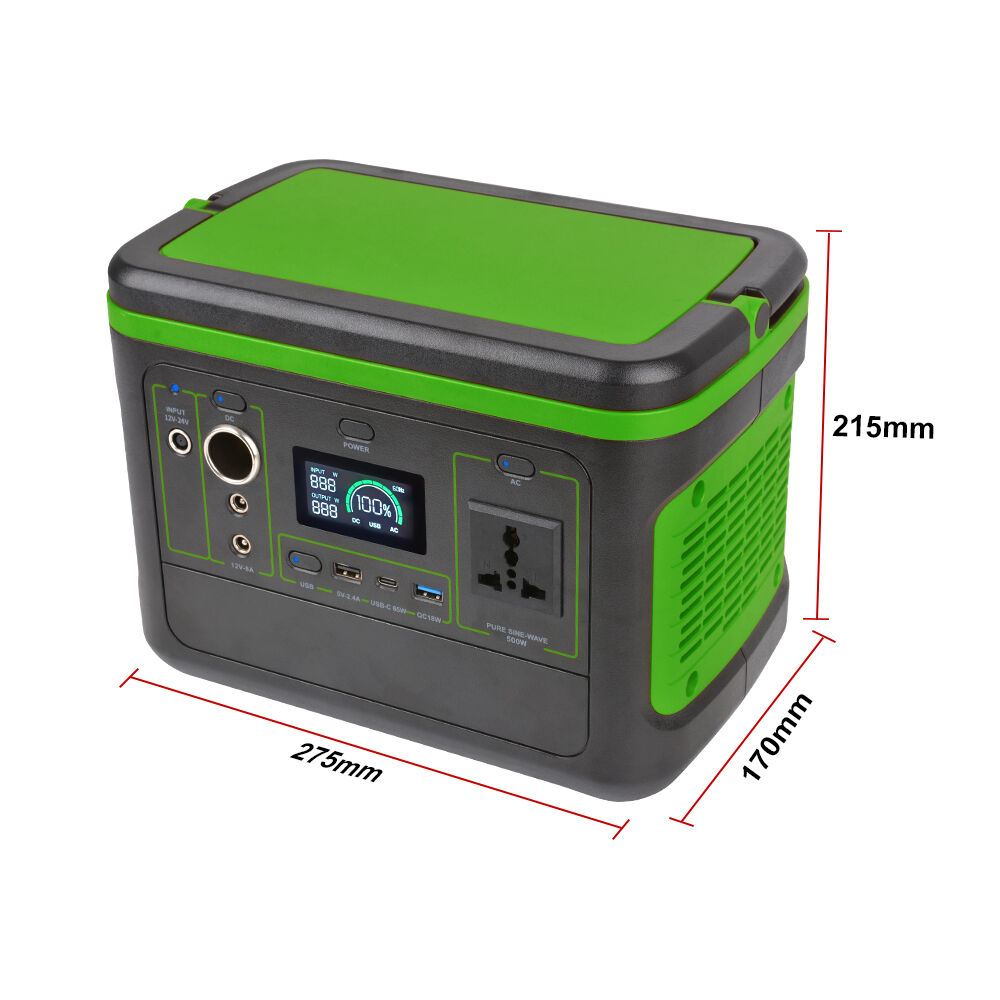
The solar energy storage landscape has experienced a transformative shift in recent years, with lithium iron phosphate technology emerging as the dominant chemistry for residential, commercial, and utility-scale applications. As renewable energy deployment accelerates globally, the question of what specific innovations are propelling LiFePO4 adoption becomes increasingly critical for stakeholders across the value chain. This article examines the technological breakthroughs, manufacturing advances, and system-level innovations that have positioned LiFePO4 as the preferred battery chemistry for solar energy storage, addressing both the technical mechanisms driving this transition and the practical implications for project developers, system integrators, and end users.
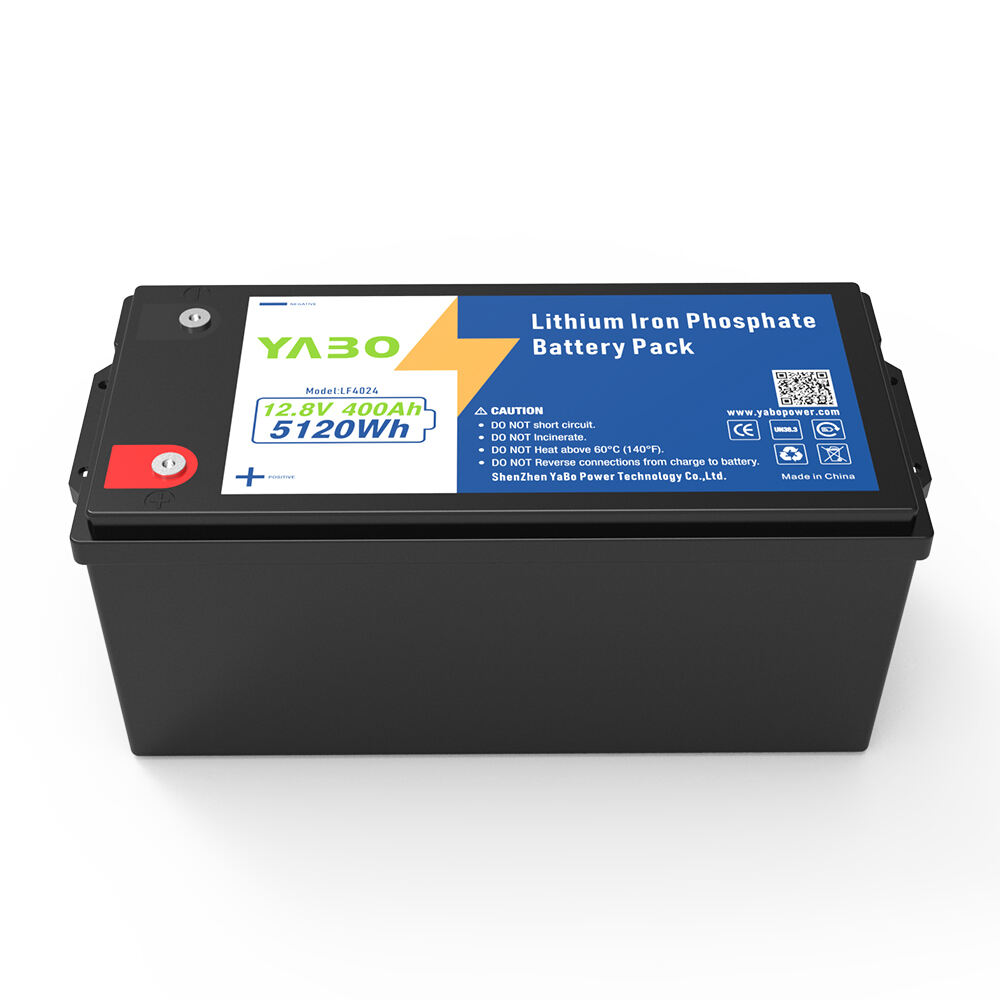
Multiple converging innovation vectors have catalyzed the widespread adoption of LiFePO4 in solar storage systems, fundamentally altering the economics and performance characteristics that define battery selection criteria. These innovations span cathode material engineering, cell manufacturing processes, battery management system intelligence, thermal management architectures, and system integration methodologies. Understanding these specific technological advances provides essential context for evaluating why LiFePO4 has captured dominant market share in the solar storage sector, outpacing competing chemistries despite certain inherent energy density limitations. The innovations driving this adoption are not isolated breakthroughs but rather interconnected developments that collectively enhance safety, longevity, cost-effectiveness, and operational flexibility in ways uniquely aligned with solar energy storage requirements.
Advanced Cathode Material Engineering and Cell Chemistry Optimization
Nano-Coating Technologies and Surface Modification
One of the most significant innovations accelerating LiFePO4 adoption involves advanced nano-coating technologies applied to cathode particles, which dramatically improve electronic conductivity and lithium-ion diffusion rates. Traditional LiFePO4 materials suffered from poor intrinsic conductivity, limiting charge and discharge rates. Modern manufacturing processes now apply carbon nano-coatings with thicknesses measured in nanometers, creating conductive pathways that enhance electron transport without compromising structural stability. These surface modifications have enabled LiFePO4 cells to achieve C-rates previously unattainable, making them suitable for high-power solar applications requiring rapid charging during peak sunlight hours and sustained discharge during evening demand periods.
The implementation of controlled carbon coating processes has also addressed particle agglomeration issues that historically reduced active material utilization. By optimizing coating uniformity and thickness, manufacturers have increased the effective surface area available for electrochemical reactions, directly translating to improved capacity retention over extended cycle life. This innovation proves particularly valuable in solar energy storage contexts where batteries undergo daily cycling patterns with seasonal depth-of-discharge variations. The enhanced surface chemistry enables LiFePO4 cells to maintain higher capacity after thousands of cycles compared to earlier generations, reducing the levelized cost of storage and extending system economic viability.
Doping Strategies and Crystalline Structure Enhancement
Material scientists have pioneered selective doping strategies that introduce trace elements into the LiFePO4 crystalline lattice, fundamentally altering electrochemical performance characteristics. Doping with elements such as magnesium, aluminum, or niobium creates lattice distortions that facilitate faster lithium-ion migration through the olivine structure. These modifications have reduced internal resistance and improved rate capability without compromising the thermal stability that makes LiFePO4 inherently safer than other lithium-ion chemistries. For solar storage applications, this translates to more efficient energy capture during variable irradiance conditions and better response to sudden load changes in grid-tied or off-grid configurations.
Crystalline structure optimization through controlled synthesis conditions has yielded LiFePO4 materials with reduced defect densities and more uniform particle size distributions. Advanced precipitation and calcination techniques produce cathode materials with optimized crystallite dimensions that balance surface area with structural integrity. These manufacturing innovations directly impact calendar life in solar installations, where batteries experience extended periods at various states of charge depending on seasonal generation patterns. The improved structural uniformity minimizes localized stress concentrations during cycling, contributing to the exceptional longevity that has become a defining characteristic of modern LiFePO4 solar storage systems.
Manufacturing Process Innovations and Production Scale Economics
Automated Cell Production and Quality Control Systems
The deployment of fully automated cell manufacturing lines with integrated real-time quality monitoring has dramatically reduced production costs while improving consistency across LiFePO4 cell populations. Modern factories employ machine vision systems, laser measurement tools, and automated testing protocols that identify and reject defective cells before they enter battery packs. This manufacturing innovation directly benefits solar storage applications by ensuring that large-format battery systems exhibit minimal cell-to-cell variation, reducing the balancing burden on battery management systems and extending overall pack life. The consistency achieved through automated production enables more accurate state-of-charge estimation and more effective utilization of installed capacity.
Process innovations in electrode coating, calendering, and electrolyte filling have increased production throughput while reducing material waste, contributing to the cost reductions that have made LiFePO4 competitive with lead-acid alternatives in many solar markets. Precision coating equipment applies electrode materials with micron-level thickness control, maximizing active material loading while maintaining structural integrity. These manufacturing advances have enabled the production of high-capacity cells suitable for large-format solar storage systems, reducing the number of cells required per kilowatt-hour and simplifying system assembly. The resulting economies of scale have accelerated market adoption by lowering upfront capital costs for residential and commercial solar-plus-storage installations.
Sustainable Manufacturing and Supply Chain Localization
Environmental and geopolitical considerations have spurred innovations in LiFePO4 manufacturing that emphasize sustainable practices and regionalized supply chains. Unlike cobalt-dependent chemistries, LiFePO4 utilizes abundant iron and phosphate precursors available from diverse global sources, reducing supply chain vulnerability. Manufacturing innovations now incorporate closed-loop solvent recovery systems, electrode scrap recycling, and energy-efficient formation processes that minimize the carbon footprint of battery production. These sustainability advances resonate strongly with solar energy stakeholders who prioritize environmental considerations throughout project lifecycles, creating alignment between renewable generation technology and storage chemistry selection.
The establishment of regional manufacturing hubs with localized raw material sourcing has reduced transportation costs and delivery lead times for solar integrators. Innovations in manufacturing flexibility allow facilities to produce cells optimized for specific solar applications, whether residential low-voltage systems or utility-scale high-voltage configurations. This manufacturing adaptability enables customization of cell formats, terminal configurations, and performance characteristics to match diverse solar storage requirements without incurring prohibitive tooling costs. The resulting supply chain resilience and product customization capabilities have accelerated LiFePO4 adoption across varied solar market segments and geographic regions.
Battery Management System Intelligence and Predictive Analytics
Advanced State Estimation Algorithms
Sophisticated battery management systems incorporating machine learning algorithms and physics-based models have unlocked the full performance potential of LiFePO4 in solar applications. Traditional BMS architectures relied on voltage-based state-of-charge estimation, which proves problematic for LiFePO4 due to its flat discharge curve. Modern systems employ Kalman filtering, coulomb counting with drift correction, and impedance spectroscopy techniques to achieve state-of-charge accuracy within one to two percent across the operational range. This precision enables solar storage systems to maximize usable capacity while maintaining protective margins that preserve cycle life, directly improving the economic value proposition of LiFePO4 installations.
Predictive analytics capabilities embedded in contemporary BMS platforms analyze historical performance data, environmental conditions, and usage patterns to optimize charging strategies for solar applications. These systems dynamically adjust charge termination voltages, current limits, and balancing strategies based on predicted solar generation profiles and load forecasts. By tailoring charging parameters to actual operating conditions rather than applying generic algorithms, advanced BMS implementations extend LiFePO4 calendar life and improve energy throughput. This intelligence layer has proven particularly valuable in residential solar installations where generation and consumption patterns exhibit high variability, enabling the BMS to adapt continuously to changing circumstances.
Thermal Management Integration and Safety Enhancement
Innovations in BMS-integrated thermal management have addressed one of the few remaining challenges in LiFePO4 solar applications: performance degradation at temperature extremes. Modern systems incorporate distributed temperature sensing with predictive thermal modeling to implement proactive cooling or heating strategies that maintain cells within optimal operating windows. These thermal management innovations leverage the inherent stability of LiFePO4 chemistry, which tolerates wider temperature ranges than alternative chemistries, while still optimizing performance through active temperature control. In solar installations exposed to significant diurnal and seasonal temperature variations, this capability preserves capacity and power delivery across environmental extremes.
Safety enhancement through multi-layer protection algorithms represents another critical BMS innovation driving LiFePO4 adoption in solar storage. Contemporary systems implement independent monitoring of cell voltages, pack current, insulation resistance, and contactor status with redundant shutdown pathways. The inherent thermal stability of LiFePO4 cathode material combines with these intelligent safety systems to create storage solutions with exceptionally low failure rates. This safety profile proves particularly important for residential solar installations where batteries reside in occupied structures, and for commercial systems where liability considerations influence technology selection. The demonstrated safety record of properly managed LiFePO4 systems has facilitated regulatory approvals and insurance underwriting that accelerate market adoption.
System Integration Innovations and Modular Architecture Development
Scalable Modular Battery Designs
The development of standardized modular battery architectures specifically designed for solar applications has simplified system integration and reduced installation complexity. These innovations enable battery systems to be configured in capacity increments matching solar array output profiles, avoiding the oversizing or undersizing problems that plagued earlier fixed-capacity storage products. Modular LiFePO4 battery designs incorporate integrated management electronics, thermal control, and standardized communication interfaces that allow parallel and series connections without external balancing equipment. This plug-and-play approach has lowered installation labor costs and reduced the technical expertise required for solar-plus-storage deployments, expanding the addressable market for LiFePO4 technology.
Innovations in mechanical packaging have produced compact, high-density LiFePO4 modules optimized for the space constraints typical of residential and commercial solar installations. Advanced structural designs maximize volumetric energy density while maintaining the thermal management pathways essential for reliable operation. These packaging innovations often incorporate integrated mounting hardware, conduit provisions, and environmental sealing that simplify installation in diverse mounting locations from indoor utility rooms to outdoor inverter enclosures. The resulting installation efficiency reduces project costs and shortens deployment timelines, both critical factors in competitive solar markets where storage increasingly influences overall project economics.
Inverter Integration and Energy Management Optimization
Deep integration between LiFePO4 battery systems and solar inverters through standardized communication protocols has enabled sophisticated energy management strategies that optimize both generation utilization and storage performance. Modern systems implement real-time power flow optimization algorithms that consider solar production forecasts, grid pricing signals, load predictions, and battery state-of-health to make continuous dispatch decisions. These innovations transform LiFePO4 batteries from passive storage devices into active grid assets that provide multiple value streams including peak shaving, demand charge reduction, frequency regulation, and backup power services. The ability to deliver these diverse services has expanded the economic justification for solar storage investments across customer segments.
Innovations in DC-coupled architectures have improved round-trip efficiency for solar-charged LiFePO4 systems by eliminating unnecessary conversion stages. These topologies connect batteries directly to the DC bus shared with solar arrays, reducing conversion losses and simplifying power electronics requirements. The high charge acceptance rate and wide voltage tolerance of modern LiFePO4 cells prove ideally suited to DC-coupled configurations, where battery voltage must accommodate the varying output of maximum power point tracking algorithms. This architectural innovation has become particularly important in off-grid solar installations where efficiency directly impacts system sizing and project viability, making LiFePO4 the preferred chemistry for remote and island applications.
Performance Optimization Through Application-Specific Customization
Cycle Life Enhancement for Daily Solar Cycling
Recognition that solar storage applications impose distinct cycling patterns has driven innovations in LiFePO4 cell design specifically optimized for shallow daily cycles with occasional deep discharges. Manufacturers have adjusted electrode thickness ratios, electrolyte formulations, and separator materials to maximize longevity under these characteristic duty cycles. These application-specific optimizations have yielded LiFePO4 cells capable of exceeding six thousand equivalent full cycles at eighty percent depth of discharge, translating to more than fifteen years of daily cycling in typical residential solar applications. This exceptional longevity directly addresses the economic barrier that historically limited battery storage adoption, reducing levelized storage costs below thresholds that justify investment without subsidies.
Calendar life optimization through electrolyte additive packages and formation protocols has extended the useful life of LiFePO4 solar storage systems beyond cycle life limitations. Innovations in solid electrolyte interface engineering create stable passivation layers that minimize ongoing parasitic reactions during float periods when batteries remain at high states of charge. This capability proves critical for solar installations in temperate climates where winter generation may not fully cycle batteries daily, leading to extended high-SOC storage periods. The resulting calendar life exceeding twenty years aligns LiFePO4 battery replacement cycles with solar panel warranties, simplifying maintenance planning and improving project financial modeling accuracy.
Temperature Tolerance and Climate Adaptability
Innovations in electrolyte formulation and cell internal design have extended the operational temperature range of LiFePO4 technology, enabling solar storage deployments across diverse climate zones. Advanced electrolyte additive packages maintain ionic conductivity at temperatures approaching freezing while improving high-temperature stability beyond traditional formulations. These thermal performance enhancements prove particularly valuable for outdoor solar installations in desert environments subject to extreme temperature swings or northern climates with extended cold periods. The ability to maintain rated capacity and power across wide temperature ranges without active thermal management reduces system complexity and improves reliability in challenging operating environments.
Cold temperature charging innovations have addressed a historical limitation of lithium-ion batteries that restricted solar energy capture during winter months in cold climates. Modified charging algorithms combined with internal resistance improvements allow modern LiFePO4 cells to accept charge at temperatures down to minus ten degrees Celsius at reduced rates, ensuring that solar generation remains useful throughout winter periods. This capability expands the geographic addressable market for solar-plus-storage solutions and improves annual energy utilization in installations previously constrained by low-temperature charging limitations. The temperature adaptability of contemporary LiFePO4 technology eliminates the need for battery heating systems in many applications, reducing parasitic losses and improving overall system efficiency.
Economic and Market Structure Innovations
Financing Mechanisms and Performance Warranties
The maturation of LiFePO4 technology has enabled innovative financing structures and comprehensive performance warranties that reduce perceived investment risk for solar storage projects. Battery manufacturers now offer capacity retention warranties guaranteeing eighty percent remaining capacity after ten or even fifteen years, backed by extensive field performance data. These warranties have facilitated project financing by providing lenders with quantifiable performance assurances that support debt underwriting. The availability of long-term performance guarantees specifically tailored to solar storage duty cycles has accelerated commercial and utility-scale LiFePO4 adoption by aligning battery warranties with solar PPA or revenue contract durations.
Innovations in battery-as-a-service business models have lowered the capital barriers to solar storage adoption by transferring ownership and performance risk to specialized service providers. These arrangements leverage the predictable degradation characteristics and low maintenance requirements of LiFePO4 technology to offer fixed monthly fees covering capacity provision, maintenance, and eventual replacement. The subscription approach proves particularly attractive for commercial solar customers seeking to avoid large upfront capital expenditures while still accessing storage benefits. The viability of these business models depends fundamentally on the longevity and reliability attributes that LiFePO4 innovations have delivered, creating a self-reinforcing cycle of market expansion and continued technology investment.
Circular Economy and Second-Life Applications
Emerging innovations in battery lifecycle management and second-life applications have improved the total value proposition of LiFePO4 solar storage investments. The gradual capacity fade characteristic of LiFePO4 chemistry creates opportunities to redeploy batteries that no longer meet primary solar application requirements into less demanding secondary uses. Standardized testing protocols and certification processes now enable retired solar storage batteries to enter markets for backup power, recreational vehicles, or small-scale renewable installations. This second-life value reduces the effective cost of new LiFePO4 deployments by establishing residual asset values that improve project economics and facilitate battery buyback or trade-in programs.
Innovations in battery passport systems and digital lifecycle tracking provide the documentation necessary to support secondary markets and eventual recycling. These systems record manufacturing data, operational history, and capacity testing results in blockchain or distributed ledger frameworks that travel with individual battery modules throughout their useful life. The transparency enabled by digital tracking mechanisms has increased confidence in second-life LiFePO4 products and improved recovery rates for valuable materials at end of life. These circular economy innovations align with the sustainability values driving solar energy adoption while creating new revenue streams that further improve the economics of LiFePO4 technology deployment in primary solar storage applications.
FAQ
What specific technical advantages do LiFePO4 innovations provide for solar energy storage compared to other lithium chemistries?
Recent innovations in LiFePO4 technology deliver several technical advantages particularly relevant to solar applications. Enhanced surface coatings and doping strategies have improved charge acceptance rates, enabling batteries to capture peak solar generation more effectively during midday irradiance spikes. The inherent thermal stability of the phosphate-based cathode structure, combined with advanced BMS safety systems, creates exceptionally safe installations suitable for residential environments. Cycle life innovations yielding six thousand or more full-depth cycles align perfectly with daily solar storage patterns, providing economic service life exceeding fifteen years. The flat discharge voltage curve of LiFePO4, once considered a limitation, now enables more consistent inverter operation and simplifies system design. Finally, the temperature tolerance improvements allow LiFePO4 systems to operate across wider environmental ranges without active thermal management, reducing complexity and improving reliability compared to chemistries requiring strict thermal control.
How have manufacturing innovations reduced LiFePO4 costs to make solar storage economically viable?
Multiple manufacturing innovations have converged to reduce LiFePO4 battery costs by approximately seventy percent over the past decade. Automated production lines with integrated quality control have dramatically increased manufacturing yields while reducing labor content per kilowatt-hour produced. Innovations in electrode coating processes maximize active material loading while minimizing expensive binder and conductive additive requirements. The scale economies achieved through gigawatt-scale factory deployments have reduced fixed cost allocation per unit, while material science innovations have enabled higher energy density cells that require less packaging and interconnect hardware per usable kilowatt-hour. Additionally, the development of regional supply chains for iron and phosphate precursors has reduced raw material costs and eliminated the supply chain premiums associated with scarce materials like cobalt. These compounding cost reductions have reached inflection points where solar-plus-storage installations achieve economic returns without subsidies in many markets, fundamentally changing adoption dynamics.
What role does battery management system innovation play in maximizing LiFePO4 performance in solar applications?
Advanced battery management systems represent perhaps the most critical enabler of LiFePO4 performance optimization in solar contexts. Sophisticated state-of-charge estimation algorithms compensate for the flat voltage curve characteristic of LiFePO4, enabling accurate capacity tracking that maximizes usable energy storage. Predictive charging strategies adjust parameters based on weather forecasts and historical solar production patterns, optimizing charge acceptance while preserving cycle life. Distributed temperature sensing with active thermal management maintains cells within optimal performance windows despite diurnal temperature swings typical of outdoor solar installations. Cell balancing innovations correct small capacity variations that inevitably develop across large battery banks, ensuring uniform utilization and preventing premature capacity loss. Communication protocol standardization enables deep integration with solar inverters, creating unified energy management systems that optimize dispatch decisions considering solar generation, grid conditions, load forecasts, and battery health simultaneously. These intelligent control systems transform LiFePO4 cells from commodity components into sophisticated storage assets that adapt continuously to application demands.
Are current LiFePO4 innovations sufficient to support the projected growth in solar energy storage deployment?
The pace of LiFePO4 innovation strongly supports projected solar storage growth trajectories through at least the next decade. Ongoing research in high-voltage LiFePO4 formulations promises fifteen to twenty percent energy density improvements without compromising safety or cycle life advantages. Manufacturing capacity expansion plans from major producers indicate sufficient supply to meet forecasted demand growth, with modular factory designs enabling rapid capacity additions as markets develop. The demonstrated ability of LiFePO4 technology to scale from residential kilowatt-hour systems to utility-scale megawatt-hour installations provides deployment flexibility across all solar market segments. However, continued innovation will prove essential to address emerging requirements including faster response times for grid services, improved low-temperature performance for northern markets, and further cost reductions to compete with emerging storage technologies. The robust innovation pipeline currently active across cathode materials, manufacturing processes, and system integration suggests LiFePO4 will maintain its dominant position in solar storage applications throughout the energy transition.
Table of Contents
- Advanced Cathode Material Engineering and Cell Chemistry Optimization
- Manufacturing Process Innovations and Production Scale Economics
- Battery Management System Intelligence and Predictive Analytics
- System Integration Innovations and Modular Architecture Development
- Performance Optimization Through Application-Specific Customization
- Economic and Market Structure Innovations
-
FAQ
- What specific technical advantages do LiFePO4 innovations provide for solar energy storage compared to other lithium chemistries?
- How have manufacturing innovations reduced LiFePO4 costs to make solar storage economically viable?
- What role does battery management system innovation play in maximizing LiFePO4 performance in solar applications?
- Are current LiFePO4 innovations sufficient to support the projected growth in solar energy storage deployment?